Pot Magnets vs Hook Magnets vs Diver Magnets: Which Do You Need?
Understand the key differences between pot magnets, hook magnets, and specialised diver magnets — and learn which type is right for your industrial, marine, or commercial diving application.
<h2>Key Takeaway</h2>
<p>Pot magnets, hook magnets, and diver magnets all use neodymium cores in steel housings, but they are designed for very different environments. Pot magnets excel in dry industrial holding. Hook magnets add a convenient hook for hanging applications. Diver magnets are purpose-engineered for underwater use with corrosion-resistant coatings, marine-grade hardware, and ergonomic handles designed for gloved, one-handed operation in subsea conditions.</p>
<h2>What is a Pot Magnet?</h2>
<p>A <a href="/en/category/pot-magnets">pot magnet</a> (also called a cup magnet) consists of a neodymium disc encased in a mild steel cup. The steel housing concentrates the magnetic flux toward the contact surface, significantly increasing pull force compared to an exposed magnet of the same size.</p>
<p>Pot magnets are widely used in:</p>
<ul>
<li>Workshop and factory holding applications</li>
<li>Signage and display mounting</li>
<li>Jigs, fixtures, and positioning tools</li>
<li>Cable and wire management</li>
</ul>
<p>Our standard pot magnets range from 7 kg to 130 kg pull force, available in D16 through D60 diameters. These are dry-use magnets and are not coated for marine or saltwater environments.</p>
<h2>What is a Hook Magnet?</h2>
<p>A <a href="/en/category/hook-magnets">hook magnet</a> combines a pot magnet base with a threaded hook or eyelet, creating a convenient hanging or attachment point. The hook is typically nickel-plated steel threaded into the magnet housing.</p>
<p>Hook magnets are commonly used for:</p>
<ul>
<li>Hanging tools in workshops and garages</li>
<li>Suspending lights, cables, or signs from steel beams</li>
<li>Temporary holding in manufacturing environments</li>
<li>Organising equipment on magnetic surfaces</li>
</ul>
<p>Our magnetic hooks range from 8 kg to 95 kg pull force. Like standard pot magnets, they are designed for dry, indoor applications.</p>
<h2>What is a Diver Magnet?</h2>
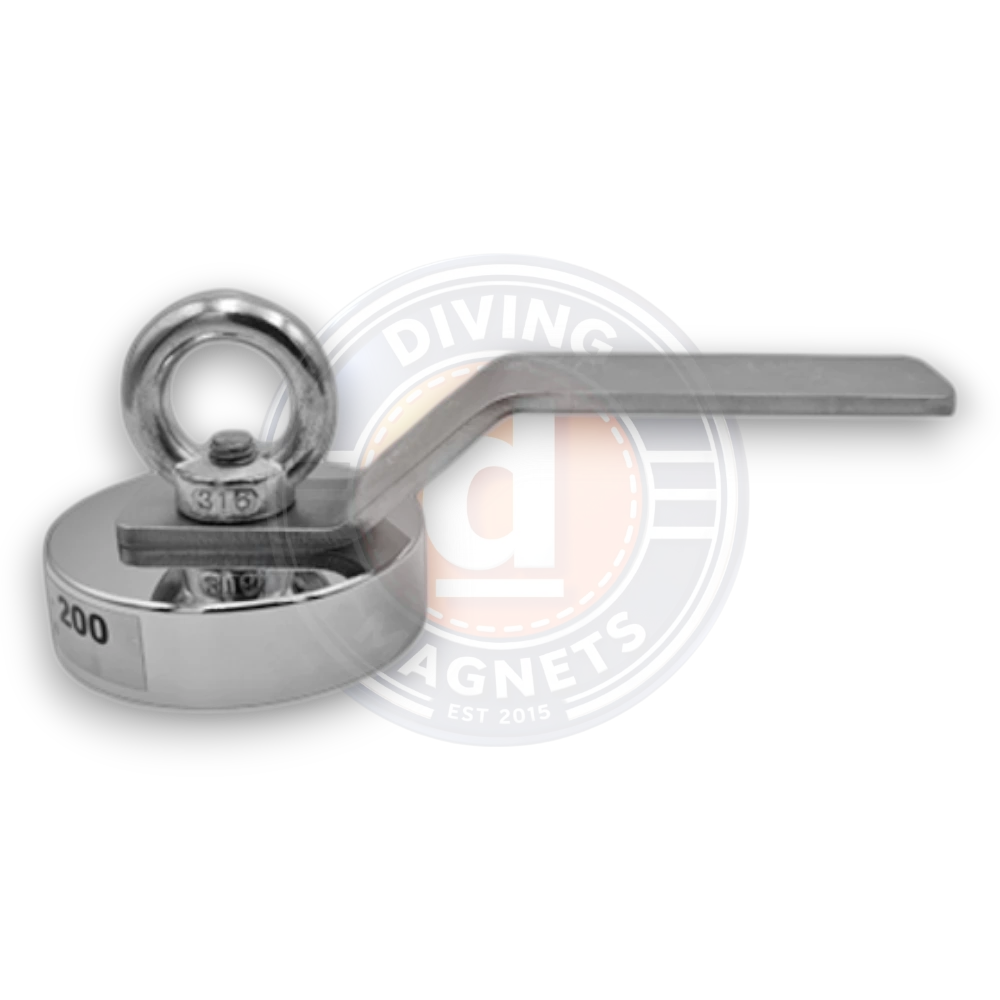
<p>A <a href="/en/category/diver-magnets">diver magnet</a> takes the pot magnet concept and re-engineers it for professional subsea use. Every component is selected and tested for prolonged saltwater exposure:</p>
<ul>
<li><strong>Neodymium core:</strong> N42–N48 grade NdFeB with axial magnetisation</li>
<li><strong>Protective coating:</strong> Multi-layer epoxy-polyethylene barrier (15–20 microns) that resists saltwater, pressure, and abrasion</li>
<li><strong>316 stainless steel hardware:</strong> Eyebolt and handle rated for marine environments</li>
<li><strong>AISI A3 steel housing:</strong> Reinforced pot designed for impact resistance</li>
<li><strong>Ergonomic handle:</strong> Allows controlled attachment and detachment with diving gloves</li>
</ul>
<h2>Side-by-Side Comparison</h2>
<p><strong>Corrosion Protection</strong></p>
<ul>
<li>Pot Magnets: Basic nickel plating — suitable for dry indoor use only</li>
<li>Hook Magnets: Basic nickel plating — suitable for dry indoor use only</li>
<li>Diver Magnets: Marine-grade epoxy-polyethylene coating — engineered for prolonged saltwater immersion</li>
</ul>
<p><strong>Hardware</strong></p>
<ul>
<li>Pot Magnets: Countersunk or threaded boss — requires separate fastener</li>
<li>Hook Magnets: Nickel-plated hook — for hanging applications</li>
<li>Diver Magnets: 316 stainless steel eyebolt + handle — for lanyard attachment and one-handed operation</li>
</ul>
<p><strong>Pull Force Range</strong></p>
<ul>
<li>Pot Magnets: 7 kg – 130 kg</li>
<li>Hook Magnets: 8 kg – 95 kg</li>
<li>Diver Magnets: 115 kg – 500 kg</li>
</ul>
<p><strong>Typical Use</strong></p>
<ul>
<li>Pot Magnets: Industrial holding, fixtures, workshop</li>
<li>Hook Magnets: Hanging, suspending, organising</li>
<li>Diver Magnets: Commercial diving, offshore inspection, subsea anchoring</li>
</ul>
<h2>Can I Use a Pot Magnet or Hook Magnet Underwater?</h2>
<p>We strongly advise against it. Standard pot magnets and hook magnets lack the corrosion protection needed for saltwater environments. Without the epoxy-polyethylene coating, the neodymium core will oxidise rapidly, causing permanent loss of magnetic strength and structural deterioration.</p>
<p>Additionally, standard hooks and threaded fittings are not rated for the dynamic loads and safety requirements of underwater work. If you need a magnet for subsea operations, choose a purpose-built <a href="/en/category/diver-magnets">diver magnet</a> from our range.</p>
<h2>Which Should You Choose?</h2>
<p>The answer depends entirely on your operating environment:</p>
<ul>
<li><strong>Dry, indoor holding:</strong> A standard <a href="/en/category/pot-magnets">pot magnet</a> delivers excellent performance at low cost</li>
<li><strong>Hanging or suspending items:</strong> A <a href="/en/category/hook-magnets">hook magnet</a> provides a ready-made attachment point</li>
<li><strong>Underwater or marine work:</strong> A <a href="/en/category/diver-magnets">diver magnet</a> is the only safe and reliable choice</li>
</ul>
<p>Compare specific models on our <a href="/en/compare">comparison page</a>, or visit our <a href="/en/faq">FAQ</a> for detailed answers to common questions.</p>