How Commercial Divers Use Magnets for Offshore Inspection and Maintenance
Real-world use cases for diving magnets in offshore operations — from UWILD hull surveys and pipeline inspections to subsea construction support, weld inspection, and cathodic protection work.
<h2>Key Takeaway</h2>
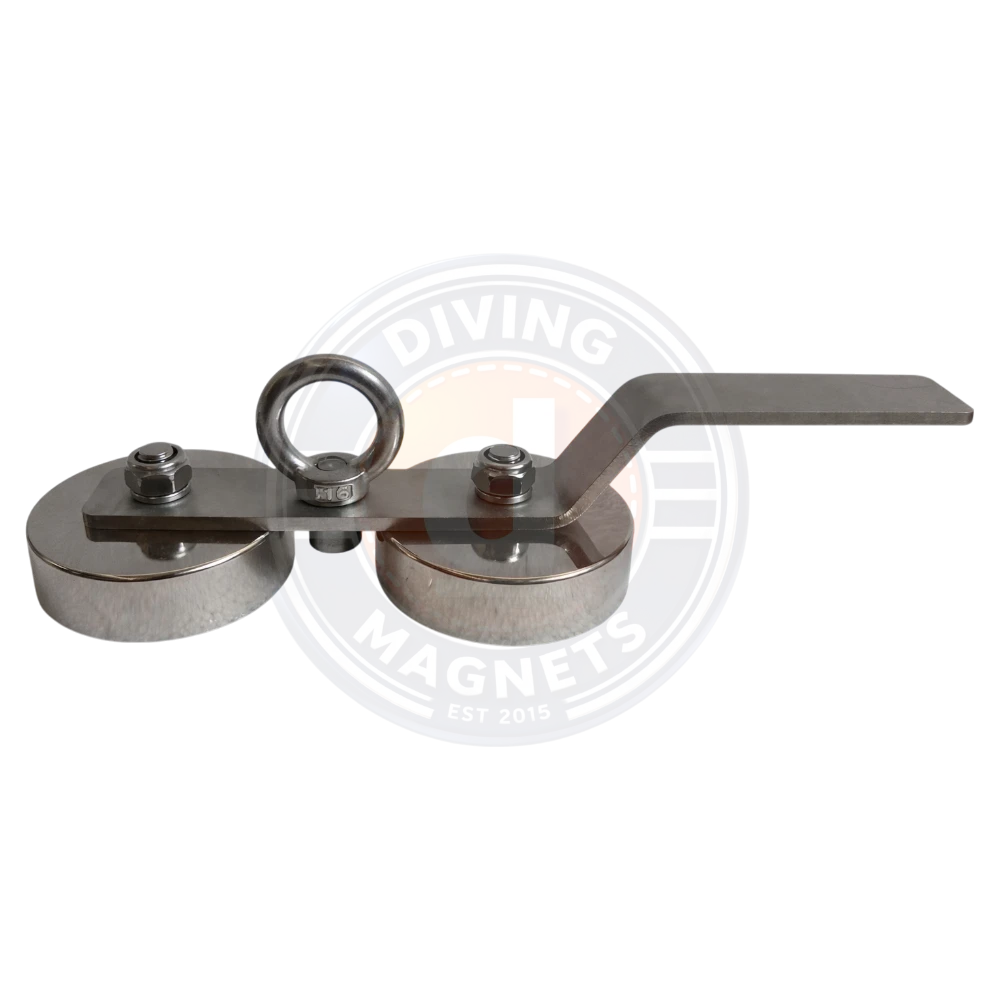
<p>Commercial diving magnets are essential tools for any diver working on or near ferromagnetic structures underwater. They allow divers to anchor themselves securely, freeing both hands for inspection, maintenance, and construction tasks. From routine hull surveys to complex offshore maintenance, the right magnet transforms operational efficiency by eliminating the need to continuously kick against currents to maintain position.</p>
<h2>UWILD Hull Surveys</h2>
<p>Underwater In-Lieu of Drydocking (UWILD) surveys allow ship operators to comply with classification society requirements without the time and expense of drydocking. During these surveys, commercial divers methodically inspect the hull, propeller, rudder, sea chests, and underwater fittings.</p>
<p>A diving magnet is indispensable for this work because:</p>
<ul>
<li><strong>Hands-free positioning:</strong> The diver anchors to the hull, freeing both hands for inspection tools, cameras, and UT (ultrasonic thickness) gauges</li>
<li><strong>Consistent positioning:</strong> Secure attachment eliminates drift during detailed inspections, improving accuracy</li>
<li><strong>Fatigue reduction:</strong> Divers conserve energy by anchoring rather than actively swimming to maintain position</li>
</ul>
<p>For UWILD work, the <a href="/en/products/diver-magnet-200">Diver Magnet - 200</a> and <a href="/en/products/diver-magnet-250">Diver Magnet - 250</a> are the most popular choices, offering strong holding on painted hull surfaces while remaining manageable for extended survey periods.</p>
<h2>Pipeline Inspection and Maintenance</h2>
<p>Subsea pipelines require regular inspection for corrosion, coating damage, span conditions, and cathodic protection system integrity. Divers working on pipeline inspections use magnets to:</p>
<ul>
<li>Anchor to the pipe during close visual inspection (CVI)</li>
<li>Hold position during UT thickness measurements</li>
<li>Secure themselves during pipeline repair and clamp installation</li>
<li>Stage tools on the pipe surface during complex operations</li>
</ul>
<p>Pipeline work often involves curved surfaces, which reduce the effective contact area and pull force. For this reason, many pipeline inspection teams prefer the higher-rated models: <a href="/en/products/diver-magnet-280">Diver Magnet - 280</a> or <a href="/en/products/diver-magnet-320">Diver Magnet - 320</a>, which maintain adequate holding power even on curved surfaces.</p>
<h2>Ship Hull Cleaning and Maintenance</h2>
<p>Commercial divers performing hull cleaning — removing marine growth, polishing propellers, and servicing sea chests — need reliable anchoring throughout extended work periods. The magnet keeps the diver positioned against the hull while they operate:</p>
<ul>
<li>Hydraulic hull-cleaning equipment</li>
<li>Rotary brushes and scrapers</li>
<li>Inspection cameras and NDT equipment</li>
<li>Anode replacement tools</li>
</ul>
<p>Hull cleaning generates significant reactive forces from the tools, so divers typically select magnets in the 200–280 kg range. The <a href="/en/products/diver-magnet-250">Diver Magnet - 250</a> is a particularly popular choice for hull cleaning operations.</p>
<h2>Subsea Construction Support</h2>
<p>During offshore construction — including jacket installation, riser connection, and J-tube operations — divers frequently need to anchor to steel structures while performing tasks that require both hands:</p>
<ul>
<li>Guiding rigging and slings into position</li>
<li>Operating hydraulic bolt tensioners</li>
<li>Installing clamps, anodes, and protective covers</li>
<li>Performing underwater welding and cutting</li>
</ul>
<p>Construction work in open water typically involves stronger currents and more dynamic conditions than sheltered harbour work. For these operations, the heavy-duty <a href="/en/products/diver-magnet-400">Diver Magnet - 400</a> and <a href="/en/products/diver-magnet-500">Diver Magnet - 500</a> provide the maximum holding power needed to work safely and efficiently.</p>
<h2>Salvage and Recovery Operations</h2>
<p>While diving magnets are not lifting equipment, they play a supporting role in salvage and recovery by allowing divers to anchor securely while rigging salvage hardware. During wreck surveys, structure assessments, and debris clearance, a strong magnet is essential for maintaining position on irregular, corroded steel surfaces.</p>
<p>For salvage work on heavily corroded or marine-growth-covered surfaces, the highest-rated magnets are recommended because real-world pull force on degraded surfaces can be 50% or less of the rated value. The <a href="/en/products/diver-magnet-500">Diver Magnet - 500</a> delivers the best performance in these challenging conditions.</p>
<h2>Choosing the Right Model for Your Operation</h2>
<p>For detailed guidance on matching a magnet to your specific operational requirements, read our <a href="/en/articles/how-to-choose-the-right-diving-magnet-for-commercial-diving">comprehensive buying guide</a>. You can also compare all models side by side on our <a href="/en/compare">comparison page</a>.</p>
<p>Browse the full range of <a href="/en/category/diver-magnets">commercial diver magnets</a> or explore our <a href="/en/category/accessories">accessories</a> for lanyards and carabiners designed to pair with your magnet.</p>