5 Essential Safety Rules for Working with Strong Neodymium Magnets Underwater
Critical safety guidance for commercial divers working with high-pull-force neodymium magnets in subsea environments — covering pinch hazards, equipment interference, attachment procedures, and emergency protocols.
<h2>Key Takeaway</h2>
<p>Neodymium diving magnets with pull forces from 115 kg to 500 kg are powerful industrial tools that demand respect. The five non-negotiable safety rules are: always control the approach angle, protect against pinch injuries, keep magnets away from sensitive equipment, secure your magnet with a lanyard at all times, and never use a diving magnet as certified lifting gear. Following these rules prevents the most common injuries and equipment damage reported in commercial diving operations.</p>
<h2>Rule 1: Control the Approach — Always Attach at an Angle</h2>
<p>The most common mistake with strong magnets is allowing uncontrolled contact with a ferromagnetic surface. A <a href="/en/products/diver-magnet-500">500 kg pull force magnet</a> accelerating toward a steel hull can cause serious injury and damage both the magnet and the structure.</p>
<p><strong>Correct procedure:</strong></p>
<ol>
<li>Ensure the target surface is clean and free of obstructions</li>
<li>Hold the magnet at a 45° angle to the surface</li>
<li>Place the edge of the pot housing against the target area first</li>
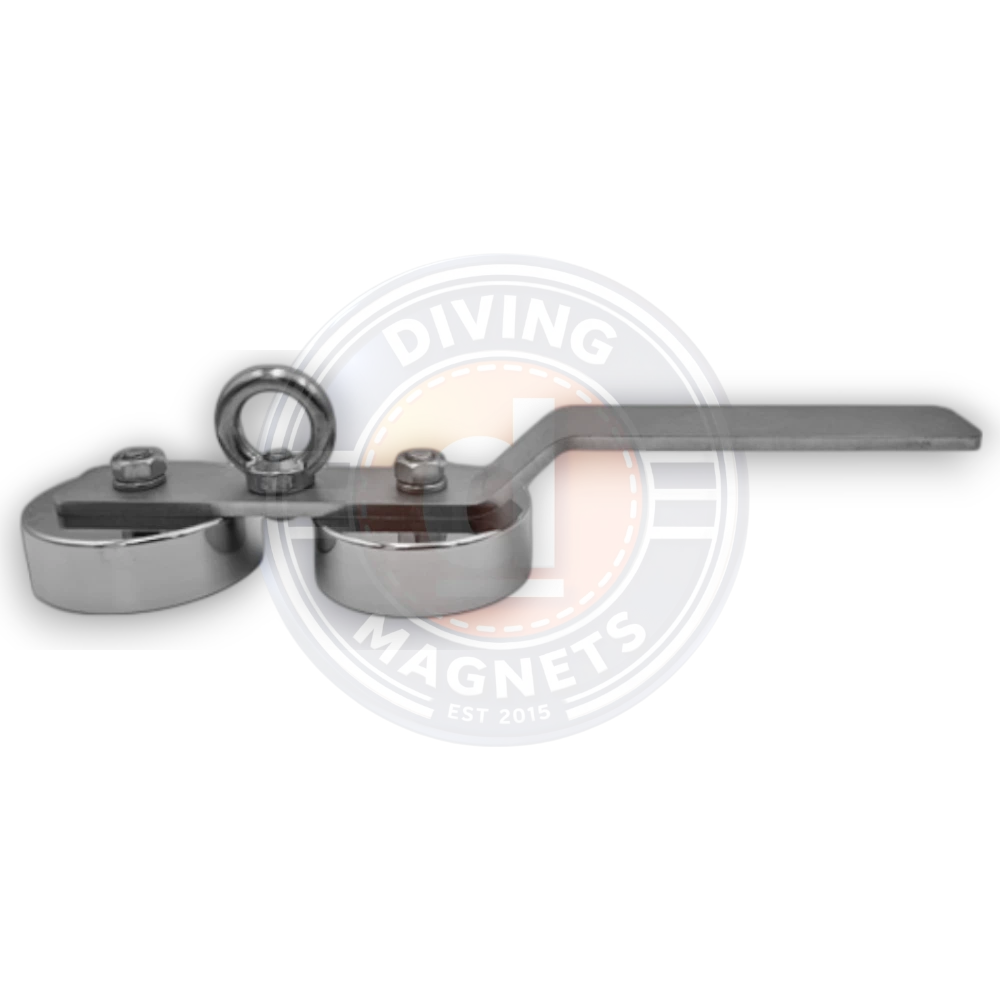
<li>Slowly rotate the handle downward, maintaining control as the full face engages</li>
<li>Verify the magnet face is flush and in full contact before applying any load</li>
</ol>
<p>This controlled approach prevents the violent snap-on that occurs when a magnet is brought face-first toward steel. Even a <a href="/en/products/diver-magnet-115">Diver Magnet - 115</a> has enough force to trap fingers or damage dive gloves if contact is uncontrolled.</p>
<h2>Rule 2: Respect the Pinch Hazard</h2>
<p>The pinch hazard is the most serious day-to-day risk when working with <a href="/en/category/diver-magnets">neodymium diving magnets</a>. When a strong magnet accelerates toward a metal surface, anything caught between them — fingers, skin, equipment, cables — will be crushed with the full rated pull force.</p>
<p><strong>Prevention measures:</strong></p>
<ul>
<li>Never place fingers between the magnet face and a ferromagnetic surface</li>
<li>Wear heavy-duty dive gloves rated for the forces involved</li>
<li>Keep the magnet secured and away from your body when swimming near steel structures</li>
<li>Be aware that the magnetic field extends several centimetres beyond the magnet face — approach distance is critical</li>
</ul>
<p>With higher-force models like the <a href="/en/products/diver-magnet-320">Diver Magnet - 320</a> to <a href="/en/products/diver-magnet-500">Diver Magnet - 500</a>, the risk is proportionally greater. These magnets can cause crush injuries through heavy diving gloves.</p>
<h2>Rule 3: Protect Sensitive Equipment</h2>
<p>Strong magnetic fields interfere with and can permanently damage electronic equipment commonly carried by commercial divers:</p>
<ul>
<li><strong>Dive computers:</strong> Magnetic fields can corrupt sensors and stored data</li>
<li><strong>Compasses:</strong> Will give false readings and may be permanently re-magnetised</li>
<li><strong>Underwater cameras:</strong> Image sensors and storage media are vulnerable</li>
<li><strong>Communication equipment:</strong> Magnetic fields can interfere with through-water comms</li>
<li><strong>Credit cards and magnetic media:</strong> Destroyed on contact</li>
</ul>
<p><strong>Safe distance:</strong> Keep magnets at least 30 cm (12 inches) from any sensitive electronic device. When stored topside, place magnets in a designated area away from electronics, navigation equipment, and medical devices (especially pacemakers and insulin pumps).</p>
<h2>Rule 4: Always Use a Lanyard</h2>
<p>A dropped magnet underwater can be difficult or impossible to recover — and a magnetised tool falling toward a steel structure is a hazard to anyone nearby. Every diving magnet must be secured with a lanyard at all times.</p>
<p><strong>Lanyard best practices:</strong></p>
<ul>
<li>Attach a carabiner or rated shackle to the 316 stainless steel eyebolt</li>
<li>Clip the other end to a D-ring on your BCD, harness, or tool belt</li>
<li>Use only hardware rated for the weight and force of your magnet — no plastic clips</li>
<li>For optimal safety, use our purpose-designed <a href="/en/category/accessories">Diver Magnet Lanyard</a></li>
<li>Inspect lanyard and attachment hardware before every dive</li>
</ul>
<h2>Rule 5: Never Use a Magnet as Lifting Gear</h2>
<p>Diving magnets are designed for personal anchoring and tool holding — not for lifting, rigging, or suspending loads. Critical differences between a diving magnet and certified lifting equipment include:</p>
<ul>
<li><strong>No safety certification:</strong> Diving magnets are not tested or certified for lifting operations</li>
<li><strong>Surface-dependent:</strong> Pull force varies dramatically with surface condition, and sudden detachment is possible</li>
<li><strong>No failsafe:</strong> Magnetic holding has no secondary retention mechanism</li>
<li><strong>Dynamic loading:</strong> Shock loads from swinging or dropped objects can exceed the rated pull force</li>
</ul>
<p>If you need to lift or rig loads underwater, use certified lifting equipment. Diving magnets are for personal positioning, tool holding, and equipment staging only.</p>
<h2>Additional Safety Resources</h2>
<p>For comprehensive handling and maintenance guidelines, see our <a href="/en/faq">FAQ page</a>. For information on how coatings protect your magnet and extend its lifespan, read our guide on <a href="/en/articles/subsea-magnet-coatings-epoxy-polyethylene-corrosion-protection">subsea magnet coatings</a>. To choose the right magnet for your operation, visit our <a href="/en/articles/how-to-choose-the-right-diving-magnet-for-commercial-diving">buying guide</a>.</p>