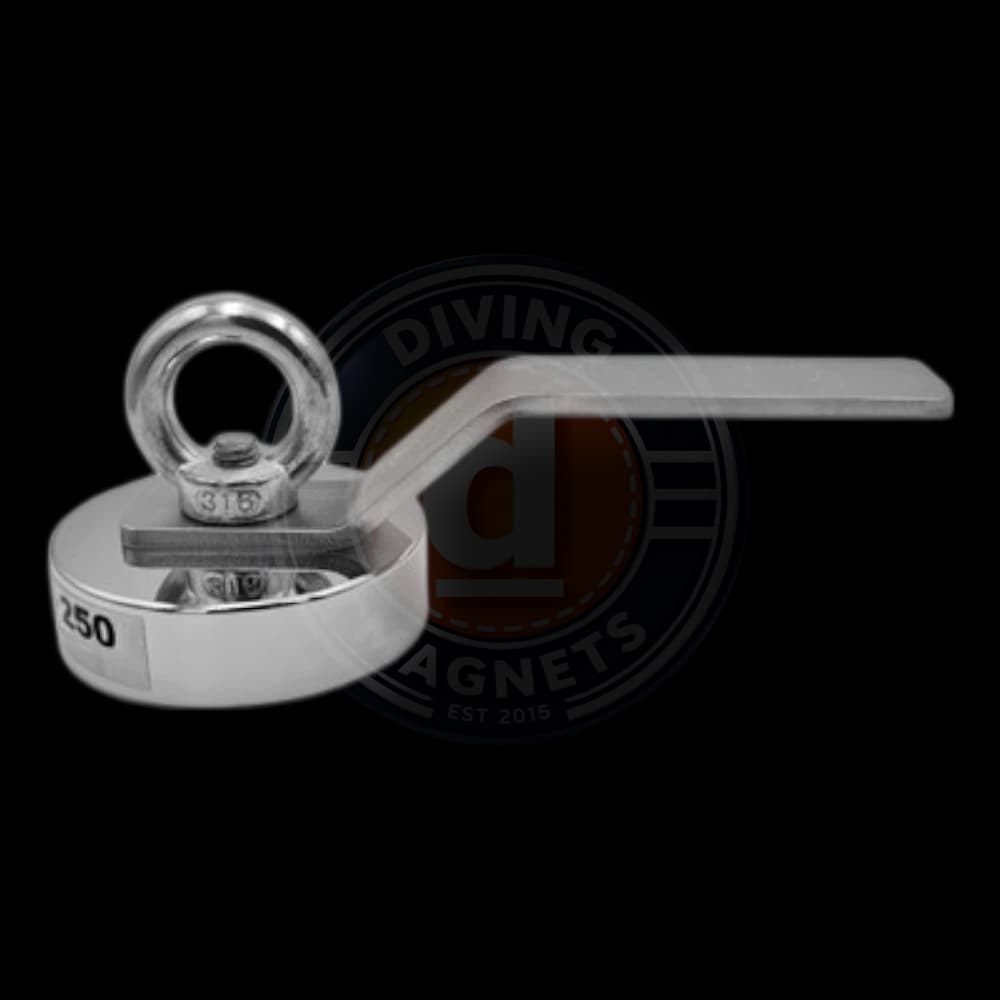
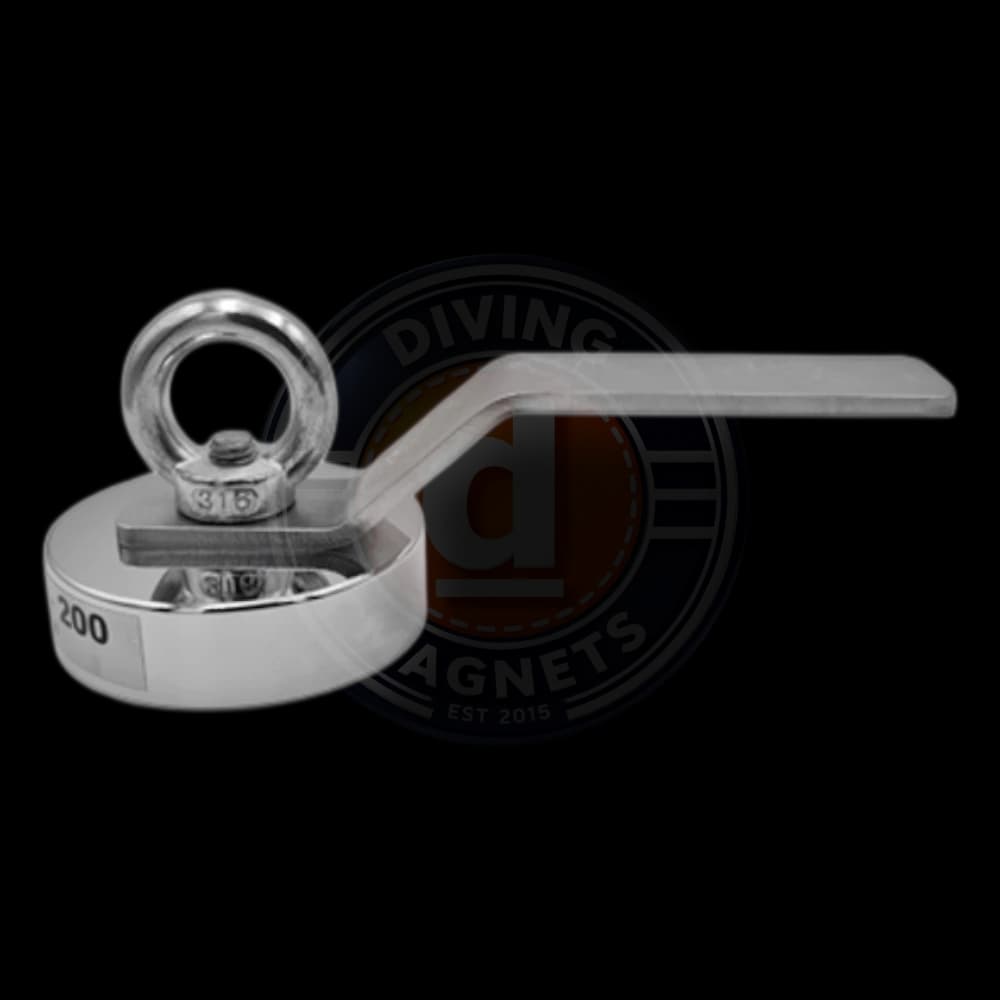
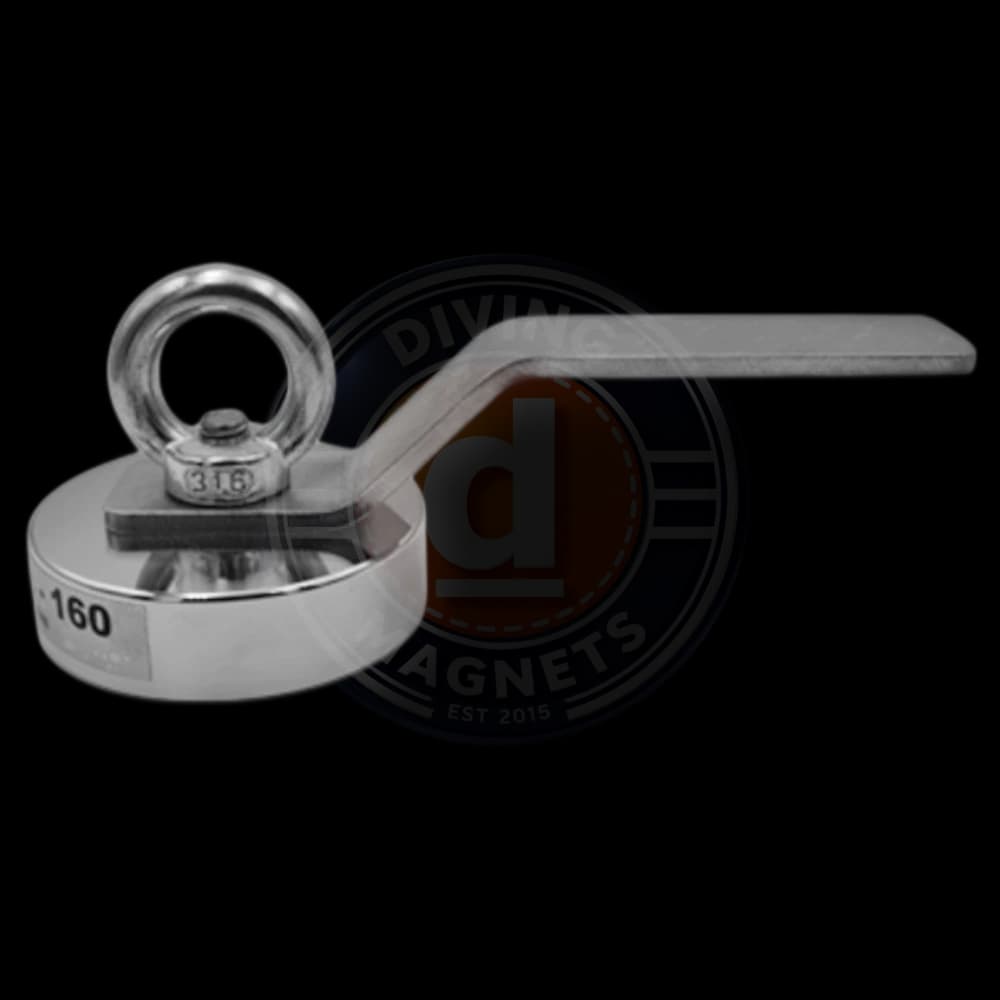
Short answer: Use a diving magnet underwater. A standard pot magnet is nickel-plated for dry use and corrodes quickly in saltwater; a diving magnet is a pot magnet re-engineered for subsea work, with an Epoxy-HDPE coated N42–N48 core, 316 stainless steel hardware and a handle.
Side by side
Coating Nickel (Ni-Cu-Ni) plating Multi-layer Epoxy-HDPE Hardware Threaded hook or fitting 316 stainless steel eye nut and handle Pull range (ours) 13–130 kg 115–500 kg Use Dry industrial holding Continuous saltwater immersion, proven to 150 mWhy a pot magnet fails underwater
Neodymium (NdFeB) is about 65% iron. Once a thin plating is chipped, saltwater reaches the core and the magnet loses strength permanently. Pot-magnet fittings are also not rated for underwater loads.
When a pot magnet is the right choice
Workshop holding, signs, fixtures and tool racks in dry conditions. Our pot and hook magnets are marked "Dry use".
Same limit for both
Neither is lifting equipment.
From our own work: “The nickel coating on a standard magnet chips easily. One knock against barnacles can take it off. Once the magnet underneath is exposed, corrosion sets in, and that damage can't be reversed.”
Related: Pot magnets (dry use) · Diver Magnets · Subsea magnet coatings explained