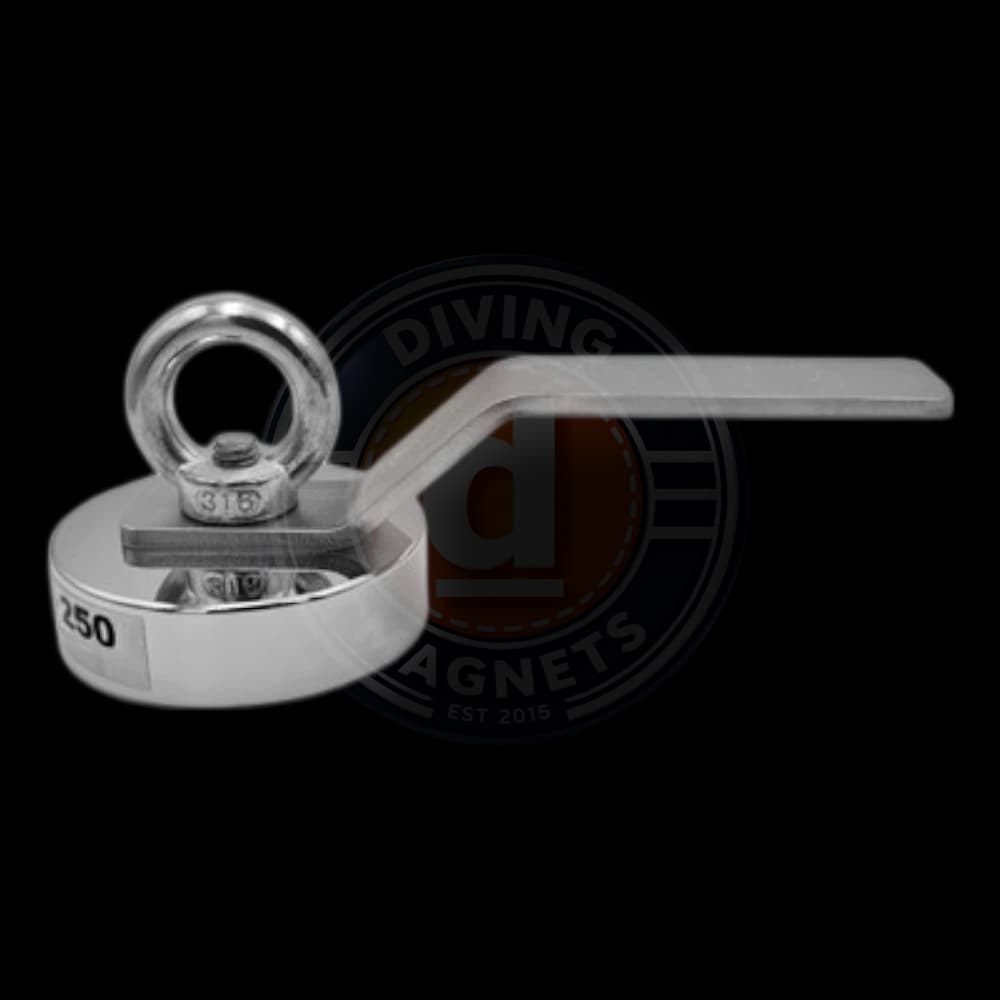
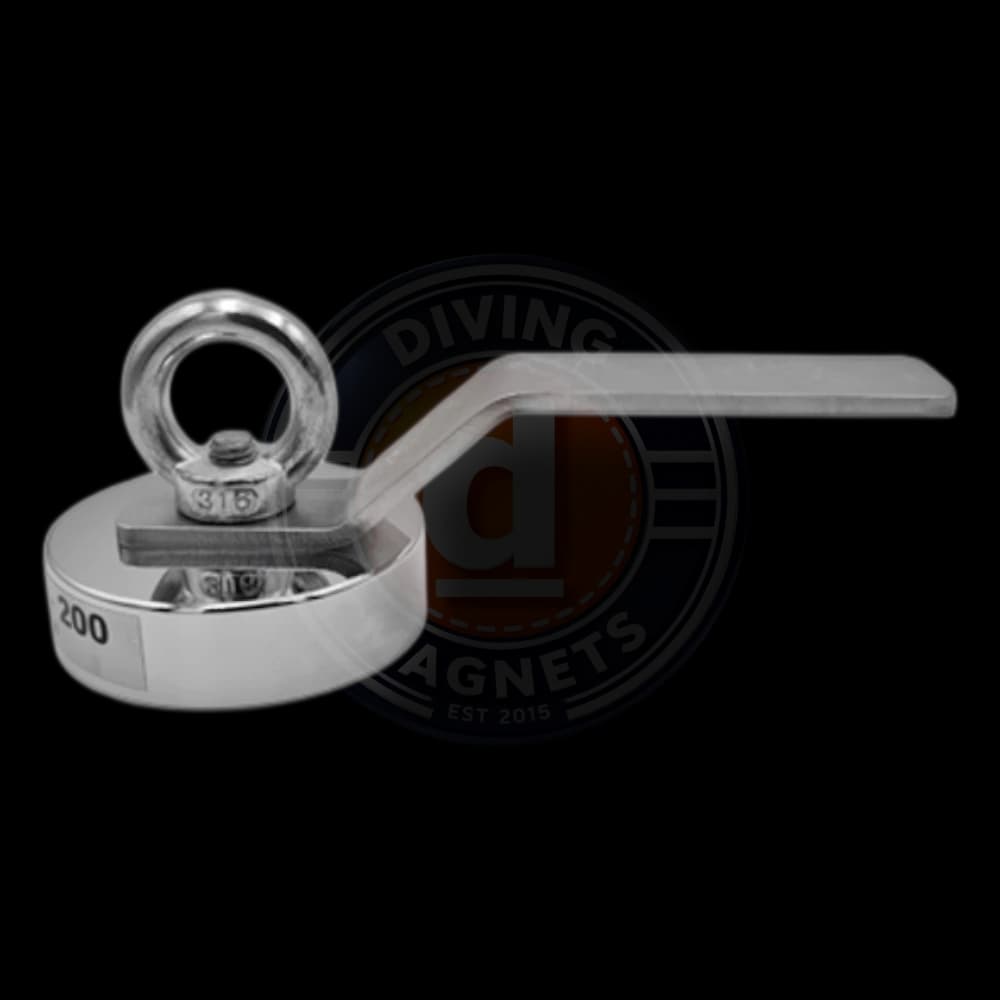
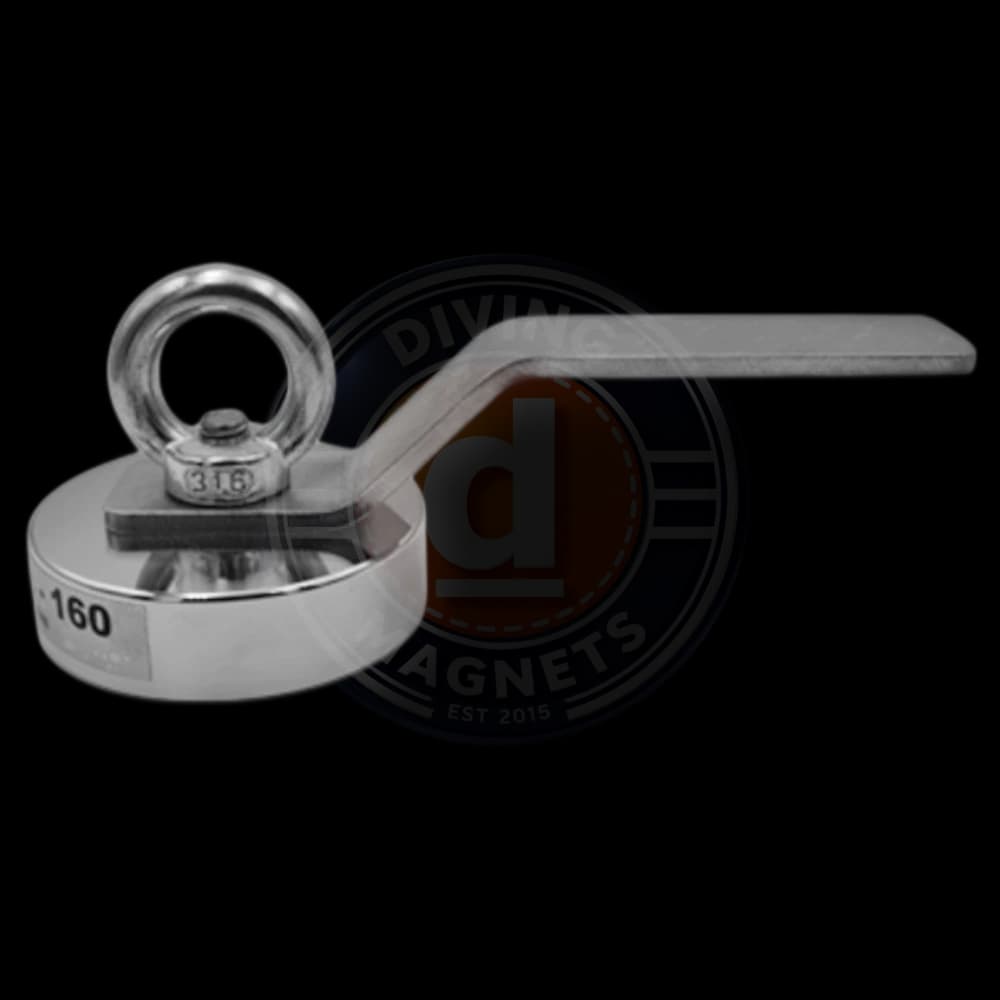
Short answer: Choose a magnet rated at at least 2–3× the load you need to hold, more for dynamic loads. In practice: 115–140 kg for light inspection, 160–280 kg for standard commercial diving, 320–500 kg for heavy offshore anchoring.
Why you need the margin
Rated pull force is measured on clean, 10 mm polished steel at 20 °C with a straight pull. Underwater, paint, growth, rust, gaps, thin plate and side-loading all reduce it, often a lot. That's why we recommend a magnet rated at least 2–3× the load.
Quick guide
Hull surveys, visual checks, light maintenance 115–140 kg Diver Magnet - 115, 140 Pipeline inspection, hull cleaning, welding, UWILD 160–280 kg Diver Magnet - 160, 200, 230, 250, 280 Strong currents, large structures, tool staging 320–500 kg Diver Magnet - 320, 400, 500Checklist
Target surface · current strength · how long it stays attached · tool load · one-handed operation needed?
Not lifting equipment — for personal anchoring and tool holding only. Always use a lanyard.
From our own work: “On risers (8 to 12 inch) and vertical members or legs, I prefer the twin Diver Magnet - 230 or 280, set in line along the member: their smaller footprints are far less affected by the curvature, so they keep a good hold where a single large magnet would rock on the curve.”
Related: Magnet pull force explained · How to choose the right diving magnet